KOF 2002 ACA NEOGEO
- 4.2
- Rating
- 50.00K
- Installs
- $3.99
- Price

 Analysis by App-foxy
I spent time with KOF 2002 ACA NEOGEO as a compact arcade fighter rather than treating it like a modern mobile game with a long checklist of rewards. That distinction matters. This is a paid release from SNK CORPORATION that brings the NEOGEO version of The King of Fighters 2002 to phones and tablets, and its appeal comes from learning the fighting system, improving execution, and trying to survive tougher matches. It is not built around a large progression map or a stream of unlock notifications.
That focused design is both its strongest quality and its main limitation. If I want a quick competitive session, a familiar arcade atmosphere, and a game that rewards practice, I can see the value immediately. If I am looking for a generous free-to-play loop, a story-heavy campaign, or a long list of collectibles, I would probably choose something else. The game has a 4.2 average from around 900 ratings, with more than 50 thousand installs, which gives a useful sense of its audience without changing what the game actually asks from the player: learn, fight, lose, adjust, and try again.
What makes the first sessions work
The early goal is refreshingly clear: assemble a team, enter fights, and discover which characters and combinations suit the way I play. I do not need to understand every advanced technique before starting. The basic rhythm is easy to grasp, but each match quickly exposes the difference between simply pressing attacks and controlling space with intention.
You May Also Like

 Blood Strike: 2.5 Anniversary
Blood Strike’s Loadouts Turn Every Drop Into a Tactical Gamble
A close look at Blood Strike’s custom loadouts: how fast access to signature weapons reshapes its battle royale rhythm, rewards preparation, and narrows the gap between fights.

 Pandora - Music & Podcasts
Pandora’s Music Is Easy to Start, but Harder to Recover
Pandora’s strength is its low-effort path from a seed to a station. Its weak spot is how much confidence it asks you to place in connection, setup, and quiet recovery.

 8 Ball Pool
 Is Built on Rivalries, Rematches, and Routine
A close look at the rivalries, rematches, shared routines, and unanswered safety questions that turn a quick pool match into a persistent mobile community.

 Samsung Music
’s Quiet Strength Is Playing What You Already Own
Its reach comes less from spectacle than from dependable access to a personal library. That simplicity is both the app’s strongest retention engine and its ceiling.

 AccuWeather: Weather Radar
AccuWeather Review: A Quick, Clear Forecast for Everyday Decisions
For everyday plans, the best forecast is the one you can understand quickly. AccuWeather makes rain timing, radar, and local conditions easy to act on, with a few trade-offs.

 Hill Climb Racing
Why Hill Climb Racing Still Turns Crashes Into One More Run
A tiny car, a bumpy hill and one more upgrade: Hill Climb Racing keeps resurfacing because its simple chaos makes every near-miss feel personal.
More From Our News Desk
View All News


That first hour is less about unlocking content and more about identifying habits. I watched for which attacks were safe enough to use, when an opponent was likely to jump, and how much damage I was giving away by attacking without a plan. Those are small observations, but they create a useful sense of progress. A player who takes a few minutes to study one recurring mistake will usually get more from the game than someone who only changes characters after every loss.
The team format also gives the opening sessions a practical goal. Rather than relying on one favorite fighter, I had to think about how three characters worked together across a match. A strong opening character might help me build confidence, while another could be better saved for a difficult opponent or a late-round recovery. I found this more interesting than a simple one-character arcade ladder because each loss encouraged me to reconsider both my controls and my team order.
There is a useful difference between learning a fighter and merely selecting one. I could recognize a character’s general style quickly, but using that style well required attention to distance, timing, and the opponent’s reactions. That gives the early game a natural teaching process without needing a tutorial-heavy structure. The game lets the player discover why a move matters through repeated situations.
Progress you can actually feel
KOF 2002 ACA NEOGEO does not depend on a conventional unlock track to make improvement visible. The clearest progress signal is personal: I begin blocking an attack that previously caught me, stop wasting powerful options, or reach a later opponent with more control than before. Those moments are easy to overlook if I expect progress bars, but they are central to the arcade-fighting experience.
I also noticed progress when matches became less frantic. At first, I reacted to everything with an attack. After more practice, I started waiting for a jump, recognizing when an opponent had committed to a long animation, and choosing a safer response. The game became more satisfying when I stopped measuring success only by winning and started measuring it by whether I had made a deliberate decision.
The lack of a large reward structure can make the game feel abrupt to players accustomed to mobile releases. There is no need to log in every day to maintain momentum, and the core appeal does not come from collecting resources. That means the game respects short sessions, but it also places more responsibility on the player to create a goal. I recommend choosing one before starting: learn one character’s reliable attacks, reach a specific point in the arcade run, or reduce the number of careless jumps.
One practical habit helped me more than switching fighters constantly. I played several matches with the same small group and focused on one weakness at a time. That made the game’s feedback easier to read. When I changed characters after every defeat, I could not tell whether the problem was a poor matchup, unfamiliar timing, or my own impatience. Staying with a team turned each match into a more useful experiment.
How the challenge builds pressure
The difficulty curve is not designed to make every encounter feel equally comfortable. Early opponents can give a new player room to understand movement and attacks, but the pressure rises as the run continues. Later fights punish repeated habits, especially predictable approaches and attacks thrown without regard for distance.
That curve works best when I treat failure as information. A defeat might show that I am relying too much on a single attack, leaving a character exposed after a blocked move, or ignoring the opponent’s preferred range. The game does not need to explain every mistake in words because the same situation often appears again. The challenge becomes fairer once I stop expecting the computer-controlled opponent to let me repeat the same plan indefinitely.
At the same time, this is not a forgiving game for someone who wants immediate mastery. Touch controls can make precise fighting more demanding than playing with a physical controller, particularly when a match requires fast directional input and an attack at exactly the right moment. I could still enjoy short sessions with the on-screen controls, but I had to accept that some errors came from handling as much as from strategy.
That is an important buying consideration. If a player already enjoys arcade fighters on a controller, this version can be a convenient way to play the classic game in a smaller format. If the player dislikes virtual buttons or expects every input to feel effortless on a phone, the conversion may become frustrating before the fighting itself has a chance to shine.
The Teen content rating also sets an appropriate expectation. This is a competitive fighting game with a more intense arcade tone, not a gentle puzzle experience. I would be comfortable recommending it to someone who understands that the enjoyment comes from combat, repetition, and learning matchups rather than from a relaxed, low-pressure mobile loop.
Why the pacing keeps some players returning
The retention pressure here is self-imposed rather than built around constant rewards. I returned because I knew I had made a mistake I could correct, not because the game was asking me to claim another timed prize. That creates a clean relationship between effort and improvement. When I won after changing my approach, the result felt earned.
Short sessions suit the format well. I could play a few matches while waiting for something, then stop without feeling that I had abandoned a complicated campaign. The same structure also supports longer sessions when I wanted to practice a team repeatedly. This flexibility is one of the strongest reasons to consider the game over a larger mobile fighter that surrounds each match with menus and progression tasks.
There is a trade-off, though. Because the motivation comes mainly from mastery, the game can lose its pull if I do not enjoy repeating scenarios. A player who needs a narrative reason to continue, frequent character rewards, or a visible series of milestones may find the pacing sparse. The game assumes that the fight itself is enough to bring me back, and that assumption will not suit everyone.
I found the best routine was to alternate between ambition and experimentation. One session could focus on pushing farther, while the next could be used to test a different character or practice a response to a recurring attack. This prevented every loss from feeling like a dead end. It also made the game feel less like a single attempt at an arcade run and more like a collection of small training objectives that I chose for myself.
Another useful approach is to stop after a clear lesson instead of playing until frustration takes over. When I noticed that I was repeating the same rushed attack, continuing immediately usually made my decisions worse. A short break helped me return with a more specific plan. That may sound simple, but it is especially relevant in a fighting game where impatience can disguise itself as aggressive play.
How it compares with other mobile arcade choices
Compared with free-to-play fighting games, this release is much more direct. I pay once rather than entering a loop built around currencies, daily tasks, or gradual access to a roster. That makes it easier to open the game and fight, and it avoids the distraction of managing a second layer of progression. The downside is that I should not expect the same constant stream of new goals that those games use to hold attention.
Compared with casual arcade games, it demands more concentration. A casual title may offer a quick win after a few taps, while this one asks me to understand timing and opponent behavior. Its category is arcade, but the experience is closer to a focused classic fighting session than to a score-chasing game that I can play without learning its rules.
Compared with playing a fighting game on a console or arcade cabinet, the phone version is more convenient but potentially less comfortable for precise inputs. The advantage is obvious: the game is available in a portable form, and the paid price is $3.99. The compromise is that the quality of a session depends partly on the device, the screen layout, and whether virtual controls feel natural to me.
Device compatibility is also straightforward for many older Android users because the game requires Android 6.0 or later. I would still think about screen size before buying. A larger display can make buttons and character movement easier to read, while a smaller phone may leave less room for comfortable hand placement. The current version is 1.2.1, so I would install the available release and check that the controls feel acceptable during the early matches before committing to a long session.
Who should buy it, and who should pass
I would recommend KOF 2002 ACA NEOGEO to players who already like classic SNK fighters, want a paid arcade experience, or enjoy improving through repetition. It is particularly suitable for someone who prefers choosing a team and working on execution instead of managing a large progression system. The game also makes sense for a fan who wants a portable version of a known NEOGEO title rather than a new mobile interpretation filled with extra layers.
I would be more cautious with a newcomer who wants a gentle introduction to fighting games. The basic concept is accessible, but long-term enjoyment depends on accepting losses and learning from them. A player looking for a story campaign, extensive customization, or a reward-heavy structure should probably choose a different mobile fighter.
I would also skip it if touch controls are a deal-breaker. A fighting game can be technically sound and still feel wrong in the hands of someone who needs physical buttons. The price is modest for a paid game, but it is still wasted if the control method prevents me from enjoying the core action.
For a realistic everyday scenario, I can imagine opening it during a short commute or a break, playing a few focused matches, and using that time to work on one specific response. I would not expect to finish a huge campaign in that window. Instead, I would aim to make one better decision than I made last time. That is where the portable format works best: it turns practice into something I can fit around the day without demanding a long setup.
My verdict on the progression loop
The progression in KOF 2002 ACA NEOGEO is best understood as skill progression. The early goals come from learning a team and reaching tougher opponents. The progress signals appear in cleaner decisions, better timing, and longer runs. The difficulty curve creates pressure by exposing repeated habits, while the retention loop depends on the desire to correct those habits rather than collect external rewards.
That design is honest, but it is narrow. I appreciate that the game does not bury its arcade fighting under unnecessary systems, and I like that a short session can still have a clear purpose. However, players who need frequent unlocks or a strong narrative will find less to hold their attention. The game asks me to supply my own motivation, which is rewarding when I am in the mood to practice and limiting when I am not.
After playing it, I see KOF 2002 ACA NEOGEO as a focused purchase for people who value classic fighting mechanics over mobile-style progression. SNK CORPORATION has kept the appeal centered on the match itself, and that remains the right choice for this kind of release. I would recommend it to a friend who enjoys arcade fighters and does not mind learning through defeat. I would not recommend it as a general-purpose casual game, but for the right player, the real unlock is better control over every decision, and that can keep the experience engaging long after the first few matches.
FAQs for KOF 2002 ACA NEOGEO
01What is KOF 2002 ACA NEOGEO?
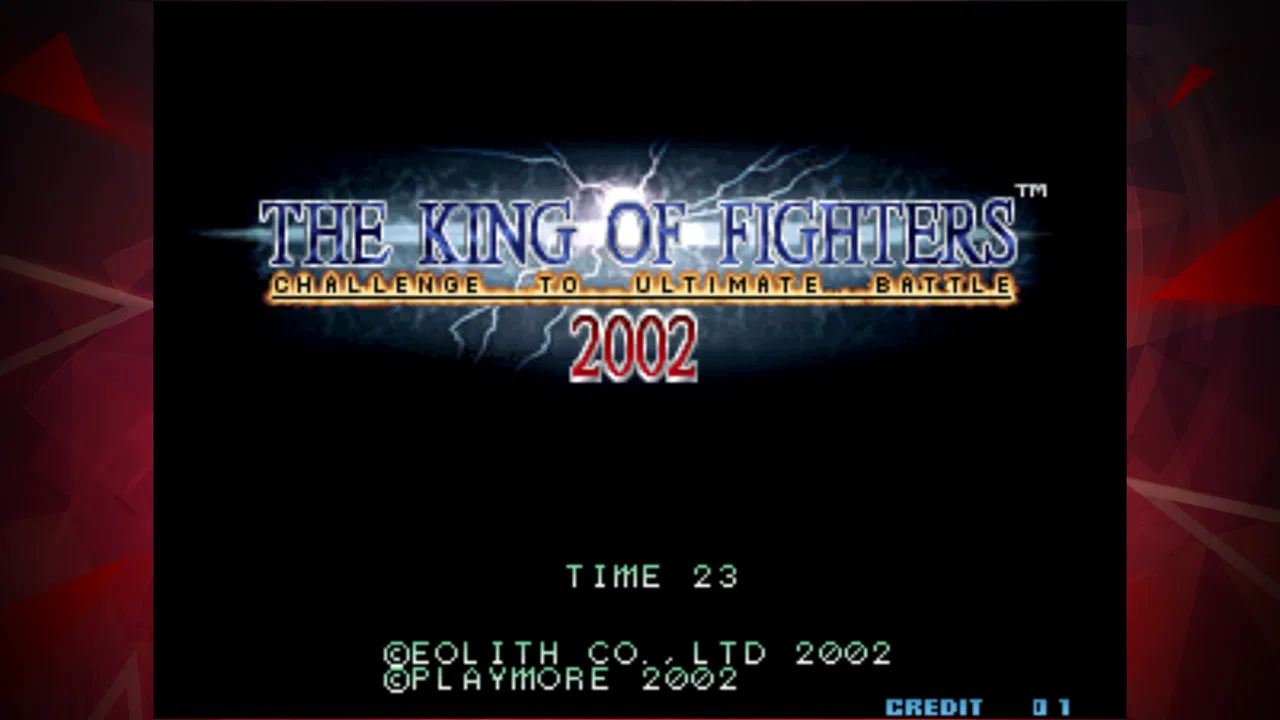
KOF 2002 ACA NEOGEO is a mobile adaptation of SNK’s classic arcade fighting game, released through Hamster’s ACA NEOGEO series. It features the original King of Fighters 2002 experience, including fast team battles, familiar characters, special moves, and the popular 3-on-3 format. The app is designed for players who want a faithful retro fighting game on Android or iOS.
02Does KOF 2002 ACA NEOGEO include the complete original game?
The app is based on the original arcade version of The King of Fighters 2002, so it includes its classic roster, stages, modes, and gameplay systems rather than a newly redesigned mobile edition. However, players should not expect the extensive online features, modern graphics, or additional content found in newer King of Fighters releases. Its main appeal is accurate arcade-style preservation.
03Can I play KOF 2002 ACA NEOGEO offline?
Yes, KOF 2002 ACA NEOGEO is primarily intended to be played offline after installation. This makes it suitable for short sessions while traveling or when an internet connection is unavailable. An internet connection may still be required for downloading the game, completing platform-related checks, or using certain device services, but the core arcade fighting experience does not depend on a constant connection.
04Are the controls comfortable on a phone or tablet?
The game provides virtual controls designed for touchscreens, including a directional pad and buttons for attacks, jumps, special techniques, and combinations. They work reasonably well for casual play, although experienced fighting-game players may find physical buttons more precise for difficult inputs. If your device supports a compatible controller, using one can make advanced combos and competitive matches feel considerably more responsive.
05Is KOF 2002 ACA NEOGEO worth downloading for new players?
It is worth considering if you enjoy classic arcade fighters, team-based battles, or retro SNK games. New players may need time to learn the movement, special commands, character differences, and timing-based combat, because the game is less forgiving than many modern mobile fighters. Players seeking a simple story campaign or free-to-play progression system may find the traditional arcade-focused design less appealing.
Pros
- Faithful arcade emulation preserves the original fighting experience.
- Responsive controls make precise combos and special moves feel reliable.
- Large roster offers plenty of fighters with distinct playstyles.
- Local two-player support makes it enjoyable for quick competitive matches.
- Quick-save functionality lets you pause and resume progress easily.
Cons
- No online multiplayer limits competitive play to local matches.
- The presentation feels dated compared with modern fighting games.
- Unlockable content and progression systems are very limited.
- Touch controls can feel cramped during fast-paced battles.
- The game requires a separate purchase rather than being free to play.

KOF 2002 ACA NEOGEO
Gallery